Think Big [Book Review]

What do you do when your child says ‘I’m bored’? If you’re like me you might say: “Go outside” or “Play with your sister/brother” or “Play with your [insert latest toy]” or my favourite “Go make something”!

I’m a true believer that if you leave children to work through their feelings of boredom they come up with some really fun and inventive ways to spend their time. But sometimes they need some extra help getting there. To get from ‘bored’ to ‘engaged’ requires inspiration to strike. THINK BIG is simple book that does just that – it sparks the imagination.

With few words (only a couple words per page), this charming book inspires us to get creative in any number of ways: paint, dance, sing, cook, play music, perform, brainstorm, sew, knit, build…

Once fun creative ideas are suggested the following carefully chosen words empower the reader (or listener) to think on their own:

“No thought

Too great

You think

We’ll wait…

Imagine”

This book opens us to a world of possibility for finding joy through many art forms available to us and acknowledges the need for a “brave heart” to make it happen.

I highly recommended this easy read for children of all ages to inspire us all to THINK BIG.

Next time your faced with boredom in your home connect with your child through a story like this one and enjoy the thinking that unfolds.

Published by Scholastic Inc.

*This is the first of a series where I will review books that inspire creativity or highlight a creativity skill that you can share and encourage in your child.*

Please share this post and comment below. What books you’ve read lately that have inspired your creativity?


Makerspace 101 Guide

Makerspaces

Have you heard of Makerspaces? They are certainly gaining momentum in schools and libraries around the world yet in my day to day interactions I’m finding the term ‘makerspace’ to be a relatively unknown concept. Doing my part to change that! Let’s take a moment to explore what Makerspaces are all about in this quick ‘Makerspace 101 Guide’!

What is a Makerspace?

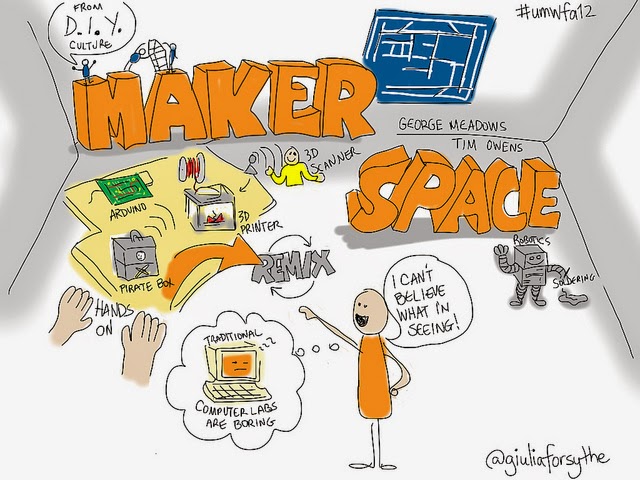
A makerspace is a place where people can gather to create, build, explore and discover using different types of materials and tools. Sometimes referred to as STEAM labs, hacker spaces or fab labs, makerspaces are popping up in schools, libraries and community centres all around the world.


History

Makerspaces grew out of DIY and hacker cultures. The “maker movement” is said to have started in 2005 when the first Make Magazine was published. This movement established a community for independent inventors, designers and tinkerers to collaborate and share projects and inspiration.

Today’s makerspaces are rich learning environments that include a range of high tech and low tech materials and serve to foster grassroots innovation within communities.

Makerspace

Image Source

What is the purpose of a makerspace?

A Makerspace is a place where someone could come to learn how to use a new tool or material in a new way, see what others are working on and/or explore and discover how to use that new material or skill in pursuit of an intrinsically motivated project.

It’s basically a place where you can make cool stuff… while learning through hands on experimentation… practicing creative problem solving… and persevering through challenges to reach your end goal.

What do you want to make?

Image Source

Who are makerspaces for?

The following list taken from the Makerspace Playbook answers the question ‘What makes a Maker?’:

  • Makers believe that if you can imagine it, you can make it. We see ourselves as more than consumers – we are productive; we are creative.
  • Makers seek out opportunities to learn to do new things, especially through hands-on, DIY (do-it-yourself) interactions.
  • Makers comprise a community of creative and technical people that help one another do better. They are open, inclusive, encouraging and generous in spirit.
  • Makers celebrate other Makers – what they make, how they make it and the enthusiasm and passion that drives them.

“Everyone is a Maker, and our world is what we make it.”

– Makerspace Playbook

maker1

Image Source

What does a Makerspace look like?

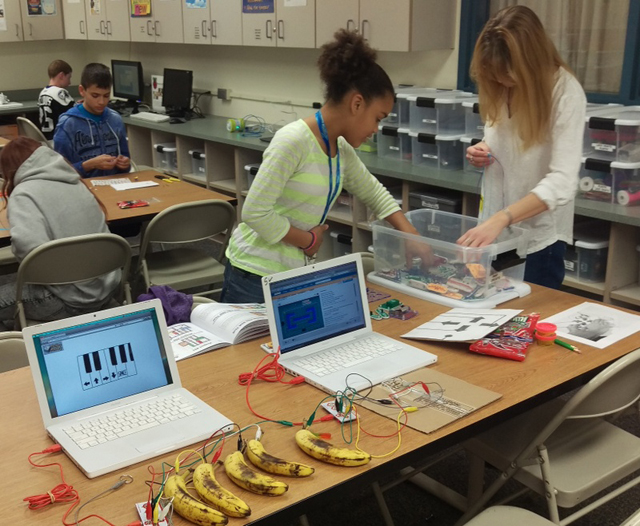
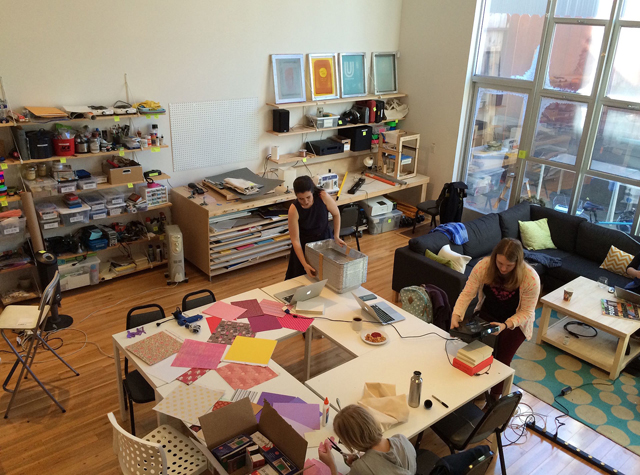
Makerspaces are typically designed with a balance of large work surfaces for collaboration and areas for quiet tinkering independently. Materials include a diverse range of tools and supplies organized in clear containers to spark the imagination in times of ‘Maker’s block’.

Other things you might see in a Makerspace:

  • An “idea rummage box” is a place for kids to store extra materials or objects that might inspire others.
  • Wall space or a shelving area for showcasing products and the process to seed ideas and inspiration.
  • Tool and material suggestions include reusable tools (cutting materials – scissors, X-acto knife, etc., joining materials – staple gun, hot glue gun, sewing needles etc., power tools – jigsaw, sewing machine, drill etc., batteries, electronics and textiles) and consumable materials (electronics, sandpaper, adhesives, wood, textiles, tape etc.).

double_union_paper_workshop

What are the key benefits of Makerspaces?

  • Makerspaces engage students in learning.
  • STEM/STEAM (science, technology, engineering, art and math) activities.
  • Inquiry based learning.
  • Hands on exploration.
  • Encourages design thinking mindset and practices.
  • Collaboration and community building.
  • Practicing growth mindset.
  • Pursuing an intrinsically motivated goal.
  • Creative problem solving skill practice.
  • Idea generation, development and testing > experiencing the creative process.


Makerspace Project

Image Source

Resources:

Additional articles you might be interested in:

Makerspace Playbook, School Edition – a comprehensive pdf resource for starting a Makerspace

What is a Makerspace? Video – an excellent glimpse at the experience from both student and teacher’s perspectives

Makerspace Project Ideas – Pinterest

Designing a School Makerspace

Advocating for Makerspaces in Libraries

Building a Makerspace Library

Defining Makerspaces: What the Research Says

7 Things You Should Know About Makerspaces

The Big Book of Makerspace Projects

My Book of Ideas!

My Book of Ideas

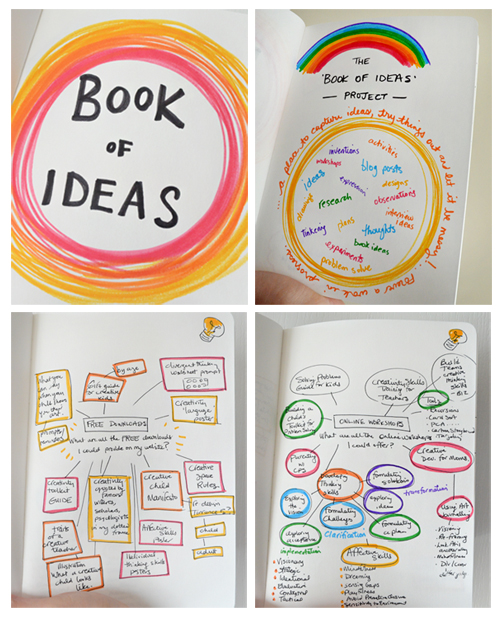
My ‘Book of Ideas’!

With all of the submissions of the Book of Ideas coming through I felt inspired to make a book of my own!

I decided to let this book evolve organically and just start writing whatever came to mind – what I’m working through at the moment – and that happens to be researching creativity and working through my website development content!

My Book of Ideas - Mindmap

When I’m starring at a blank page I tend to freeze up a bit. So, I decided to just START!

My Book of Ideas - example


I invite you to join the project! All it takes is some paper or a notebook, writing materials and time to ask yourself:

“What inspires me?”

We hope you’ll also encourage the little people in your life to keep a Book of Ideas!
For more information and to see the celebration of idea books shared so far, visit our ‘Book of Ideas’ Project page!

Introducing… The ‘Book of Ideas’ Project!

The Book of Ideas Project

The ‘Book of Ideas’ Project gives kids an outlet for their ideas, encourages new thinking and establishes a meaningful creative practice for kids.

What exactly is a ‘Book of Ideas’?

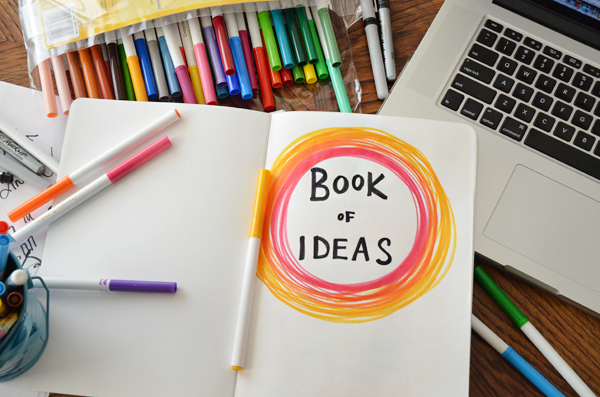
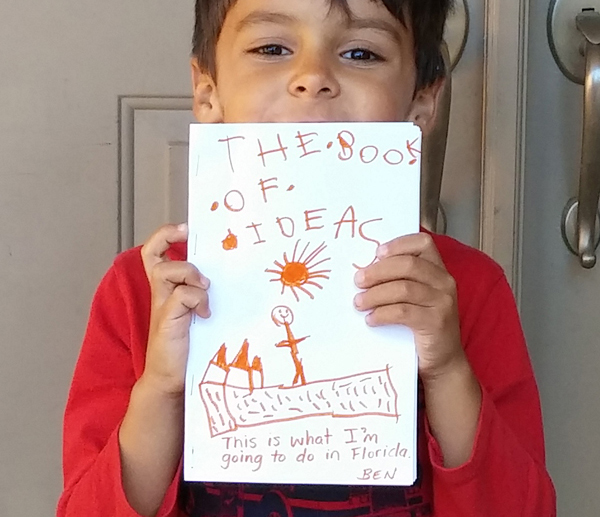
A ‘Book of Ideas’ is a way for children to express their interests, curiosities and explorations of any topic of their choosing using whatever materials they would like.

So far we have seen Idea Books with story ideas for the goal of publication, song writing ideas for piano playing, a journal capturing trip events, drawing books, comic books and even a book on how to get ideas!

An Idea Book can be about anything! Science experiment documentation, song lyrics, outlines for a play, stories… etc.

There are no rules only 3 single guidelines:

  1. Write and/or draw your ideas.
  2. No idea is too crazy.
  3. Have fun!

In fact, it doesn’t even need to be a book! These boys decided to use large poser paper to write the backstory to their play using Post-It notes to hide secret messages!
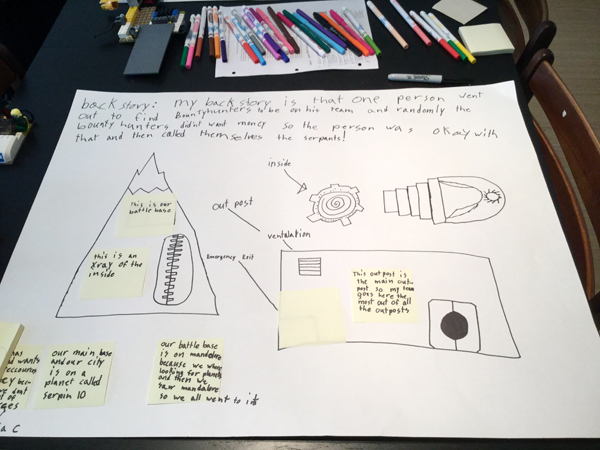
Idea Book Example

What inspired The ‘Book of Ideas’ Project?

This project was inspired by a series of events that happened within a couple of days of one another while also researching the work of Internationally renowned expert in the area of Talent Development, Sally M. Reis.

First, a bit about the first even that inspired this project! About a week ago I saw this post on my Facebook feed…
The Book of Ideas inspiration

… with the following caption:

“What did you do at school today?”

“Well Mom, I decided to create a big book of my ideas. As I come up with new ideas, I am going to write about them and add them to my book”.

This seriously warmed my heart! I though about this that entire day… I wondered…

“What if all children got into the habit of recording their interests? Hmm…”

Then, the very next day another friend posted this link to Facebook: How to raise kids to be creative thinkers, with the following caption:

“Your job as a parent is not to say, ‘Tell me what you want to be when you grow up.’ Instead, be aware of what they gravitate to, and encourage them to do more of it. Pay attention to what sparks them.”

I watched the video and was further inspired by the notion of truly observing your child’s interests and supporting them. In her video and in the TED.com interview, Jane Andraka was asked to talk about why she encouraged her sons to keep “idea books”:

It was all Luke’s fault. He generated so many ideas that he was making himself anxious. Was he ever going to be able to accomplish these ideas? Was he even going to be able to remember all these ideas? And I said, “Here’s a dollar journal. Why don’t you just start writing.” He would sketch and then go, “But I don’t know how to do that.” And I’d say, “That’s fine. Get the idea down and then, as you learn more, you can reflect back.”

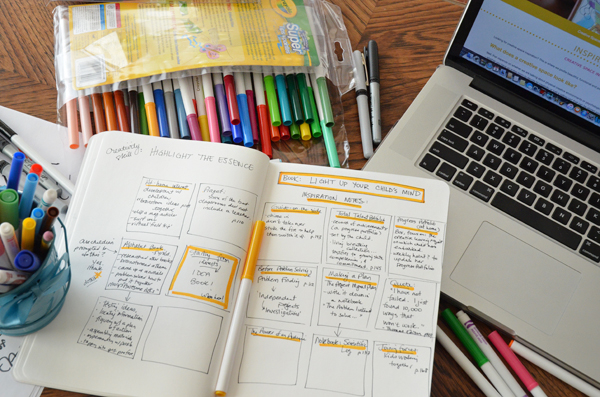
All the while, I have been researching the work of Sally Reis and reading her book (written with Joseph Renzulli and Andrea Thompson), called Light Up Your Child’s  Mind: Finding a Unique Pathway to Happiness and Success. A book about cultivating the unique talents and strengths of every child.
Light Up Your Child's Mind Book

Strategies for developing your child’s gifts and talents are provided in the book. One strategy that stood out to me was putting together ‘Progress Portfolios’: a simple system to record achievements, tangible proof that something is happening and progress is actually being made. They call this the Total Talent Portfolio, a living breathing collection that takes shape gradually. They also discuss an at-home adaption where the focus is on creative learning projects that the child has embarked on and is interested in continuing to investigate! The parent is referred to as the ‘guide-on-the-side’ to help support and assist their child in this discovery progress. It’s a beautiful thing, really.

Why keep a ‘Book of Ideas’?

A ‘Book of Ideas’ is:

  • an outlet for ideas
  • encouraged NEW thinking
  • establishes an idea system creativity practice

Plus:

  • It’s fun!
  • It allows parents a glimpse into the minds of their children, including curiosities and interests. What are they passionate about? What sparks them?
  • It provides kids record keeping of their questions and ideas for further investigation.
  • It allows you to monitor your child’s progress and your child to monitor their own progress.

We hope you’ll join us by encouraging the little people in your life to keep a Book of Ideas! For more information and to see the celebration o idea books shared, visit our ‘Book of Ideas’ Project page!

New website COMING SOON!

Thank you for visiting! This website is undergoing some BIG changes. Please come back in a couple of weeks to see the NEW site!

In the meantime, you can follow me on Instagram, Facebook, Pinterest and Twitter to keep up with the latest news on Keeping Creativity Alive – especially related to children and parenting!

Best,

Lina

What it takes to Keep Creativity Alive

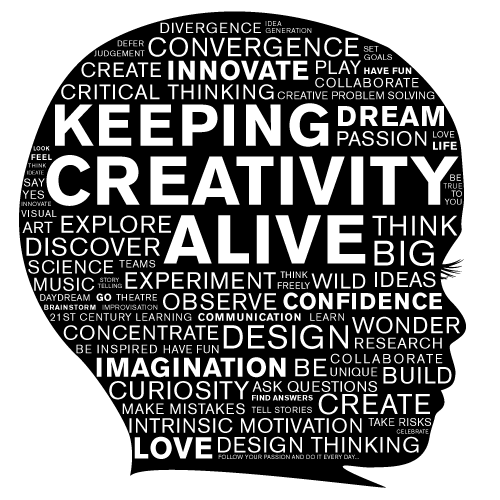
I’ve been thinking a great deal about this blog and what it means to me. It started with a passion to explore ways to nurture creativity in children. As I’ve researched and explored this topic further, I’ve discovered that it’s about that and so much more. So many ideas race through my mind about what it means to be creative and what makes us creative and for that reason I decided to encapsulate all of those thoughts in one place. Below is my graphic representation of all the things that come to mind when I think about what Keeping Creativity Alive is all about.

What is creativity about for you? Tell me, did I miss anything? 

Ideas for how to Nurture Creativity in Children, https://keepingcreativityalive.com

Video: Creativity and Education: Exploring Today’s Disconnect

A documentary inspired by the Newsweek article, The Creativity Crisis is in the works! A look at creativity in schools and “the imbalance that now exists between cultivating creativity and teaching the content that will be measured on the test.”

Needless to say, I can’t wait to see this!

Get out of their way!

“Kids are born curious. Period…. If you’re a child, you are curious about your environment. You’re overturning rocks. You’re plucking leaves off of trees and petals off of flowers, looking inside, and you’re doing things that create disorder in the lives of the adults around you.


And so then so what do adults do? They say, “Don’t pluck the petals off the flowers. I just spent money on that. Don’t play with the egg. It might break. Don’t….” Everything is a don’t.”

The key point Neil deGrasse Tyson makes?

“Help them explore.”

Set out some binoculars or a magnifying glass or something as equally interesting.. and most importantly get out of their way and let them explore!

Embrace the Shake

“Embracing a limitation can actually drive creativity.”

“Could you become more creative by looking for limitations?”

“We need at first to be limited to be limitless.”


This is a really cool talk on so many levels. Phil Hansen talks about the art making process, breaking through a creative slump, and embracing the shake and how thinking inside the box was his answer for creating art that was outside the box.

He’s also running a kickstarted campaign called “Tell me your Story about…” which has 5 days to go! A multimedia artist, Phil Hansen is ” interested in understanding people and ideas through the defining moments of our lives, how they affect us, and making art using mediums that are representative of these moments.”

I really dig the interactive nature of his art making process and how he uses people’s stories to create his work.

I’m inspired and reminded that limitations can really push the boundaries of your creative thinking. Hmm.. thinking of ways I can apply this to my own art making.. or that of my kids… Any ideas?

Child-Led Solar System Exploration

I’ve been greatly influenced by both Montessori and Reggio Emilia philosophies in which we are encouraged to “follow the child” and explore using “the hundred languages of children“. This is where this next exploration came from: V’s interest in working on a project and exploring it through different materials.

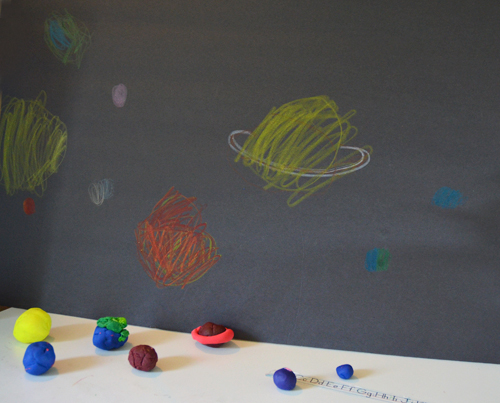
A few weeks ago V was telling me about a project some of her classmates had been working on at school. She decided that she wanted to work on it at home. She needed: black paper, pencil crayons, and play doh. The project subject: The Solar System.

Child-Led Solar System project, https://keepingcreativityalive.com

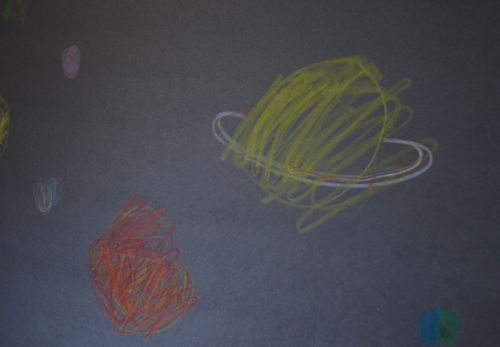
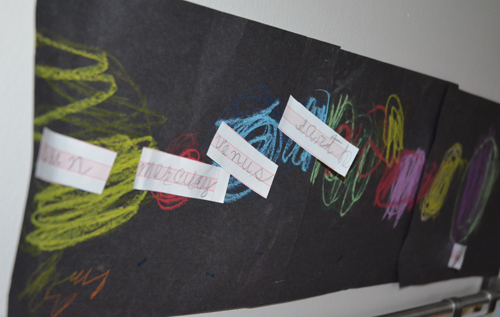
Her first task was to draw the planets. Referring to a Magic School Bus Space poster that we had, Violet started by drawing the sun, followed by colouring each planet in relation to it’s proximity from the sun all while carefully selecting colours that reflect the planet’s characteristics.

I’m not going to say she was all that careful about her drawing! At times I wanted to say “Slow down!” or “Colour more carefully” but I resisted critiquing and instead quickly became envious of her free flowing approach to drawing. I might have reminded her to make it a sphere or circle here or there… I couldn’t resist!

Child-Led Solar System project, https://keepingcreativityalive.com

As we went along we discussed some key characteristics of each planet:

Mercury: Lots of craters, Very hot and no water.

Venus: Clouds of deadly yellow poison called sulfuric acid. Covered with rocks.

Earth: Only planet in our solar system with oxygen and liquid water. Rocky planet.

Mars: The iron in soil makes the planet red. All water is frozen in polar ice caps.

Jupiter: Largest planet and has 16 moons. Made up mostly of gas.

Saturn: Surrounded by rings of ice, rock, and dust. Made up of gas.

Uranus: The gas methane makes the planet look blue-green. Travels around the sun on its side.

Neptune: Cold, dark, and blue. Strong wind.

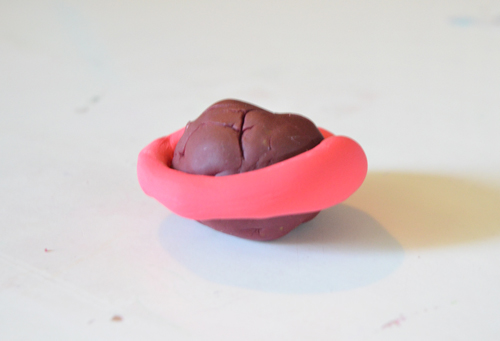
V went on to sculpt some of the planets as well as the sun and the moon. I went off to do something else and came back to Saturn…

Child-Led Solar System project, https://keepingcreativityalive.com

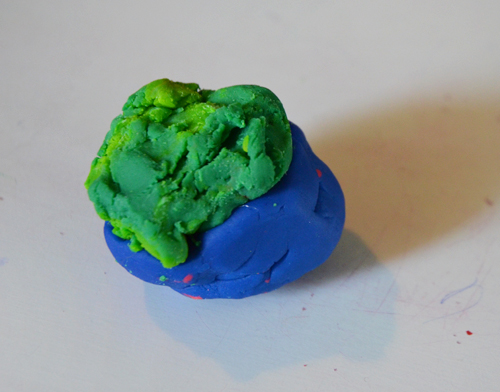
.. and Earth.. V: “The green is the grass and blue is the water.”

Child-Led Solar System project, https://keepingcreativityalive.comI’m not sure she ever completed every planet but she felt satisfied with her solar system exploration.

A few days later, V came home with her school solar system project! Goes to show that just because they’ve done it once doesn’t mean they can’t practice it again.. especially when the interest is there!

Child-Led Solar System project, https://keepingcreativityalive.com